

The Big Three

Feed your cannabis right. Cannabis needs more than light and good air circulation. A healthy plant also depends on a steady supply of water and mineral nutrients reaching its roots.
But when it comes to feeding cannabis, more is not necessarily better. Recent research increasingly suggests that successful cultivation is about providing the right nutrients, in the right balance, at the right time.
The Big Nutrients: Nitrogen, Phosphorus and Potassium
Science is everywhere

The three nutrients most growers recognize are nitrogen (N), phosphorus (P), and potassium (K).
Nitrogen is especially important for vegetative growth and the development of leaves and stems. Phosphorus is involved in energy transfer, root development and reproduction. Potassium helps regulate water movement, enzyme activity and numerous physiological processes throughout the plant.
Cannabis also requires calcium, magnesium, sulfur and smaller amounts of micronutrients such as iron, manganese, zinc, copper and boron.
A 2024 McGill University study tested different combinations of nitrogen, phosphorus and potassium during vegetative growth and found that the nutrients interact with one another rather than acting independently. Nitrogen-potassium and phosphorus-potassium combinations significantly affected roots, leaves, stems and chlorophyll production.
That is one reason blindly adding more fertilizer can create problems.
More Fertilizer Does Not Automatically Mean More Cannabis

Nutrients Just Fill in the Holes When Needed

Cannabis growers have traditionally used relatively high levels of phosphorus during flowering, based partly on the assumption that more phosphorus means larger flowers.
A 2025 Utah State University study challenged that idea. Researchers increased phosphorus from 15 to 90 mg/L and also doubled the overall strength of the nutrient solution. The plants absorbed more nutrients but the additional fertilizer produced no significant improvement in flower yield or cannabinoid quality.
In other words, once the plant has enough, adding more may simply create nutrient buildup and waste.
Water Is Part of the Feeding System


Everything Needs Water
Water does much more than prevent a plant from wilting. It transports dissolved nutrients through the root system and throughout the plant.
A 2026 Colorado State University study found that cannabis nutrient uptake changed along with water use and also differed between cultivars. Nitrogen and potassium demand were particularly high during early vegetative growth, while calcium and magnesium uptake increased as development continued.
This helps explain why a single fertilizer recipe may not be perfect for every plant throughout its entire life.
Overwatering creates a different problem. Saturated growing media can reduce oxygen around the roots. Severe water stress is also harmful. Recent research suggests moderate water conservation may sometimes be possible without sacrificing yield, but severe drought reduces photosynthesis and plant performance.
Why pH Matters
Balance Stays Important

pH matters because a plant can be surrounded by nutrients and still behave as though it is deficient.
Why?
The pH may be wrong. pH measures how acidic or alkaline the water or root environment is. It affects the chemical form and availability of nutrients, which determines whether the roots can absorb them efficiently.
Cannabis research generally places hydroponic nutrient solutions around the mildly acidic range of approximately pH 5.5 to 6.0, with many soilless systems operating around 5.5 to 6.5. At excessively high pH, nutrients such as phosphorus, iron and manganese can become less available. Very low pH can increase the availability of some elements to potentially harmful levels.
That is why indoor growers commonly use a digital pH meter and, particularly in hydroponic or coco systems, an electrical conductivity (EC) meter. EC provides an estimate of the concentration of dissolved fertilizer salts in the water.
Conclusion
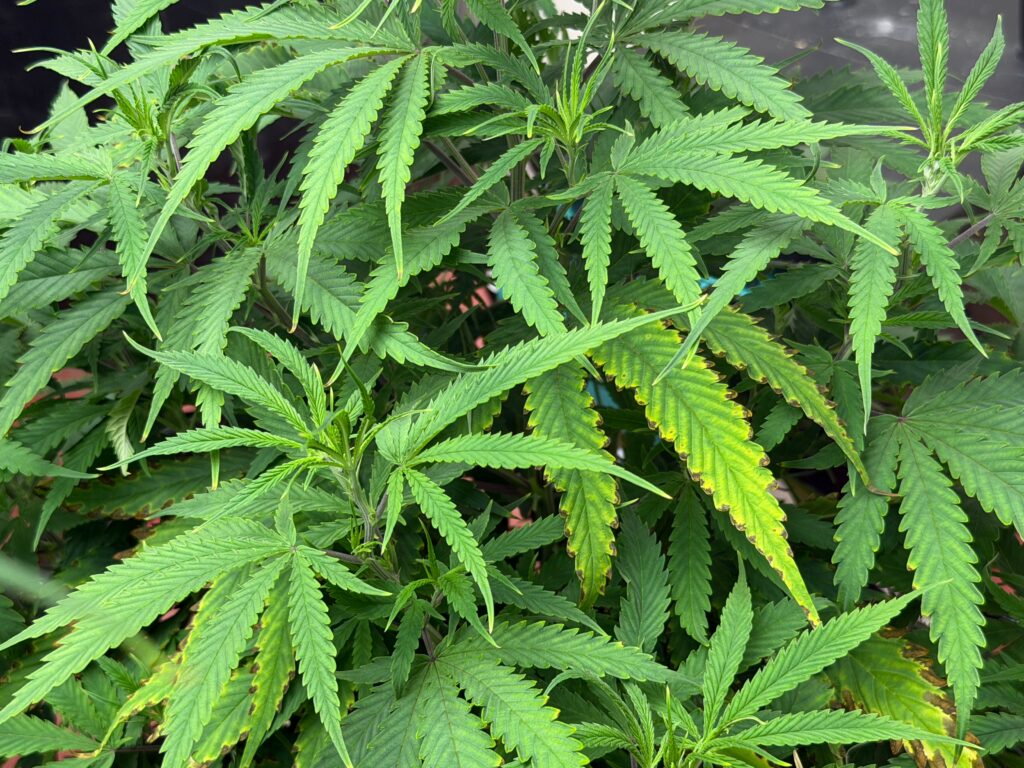
In conclusion, successful cannabis nutrition is not about feeding the plant as much as possible. It is about balance.
Provide enough water to maintain healthy roots, supply the essential nutrients the plant actually needs, and keep the root zone pH within a range where those nutrients remain available.
Modern cannabis research increasingly supports a simple principle growers sometimes overlook that more fertilizer does not necessarily produce more flower. Better management should produce more flower. A person could check this place out for their own at home medical grow.
